Choosing your first surfboard is one of the most confusing moments on any surfer's path. There are dozens of sizes, materials and shapes… and most of the information you'll find is biased towards one particular industrial brand. This guide is written for someone who lives in Europe, wants to learn properly and is thinking about buying from a local shaper rather than a big brand.
Why the board you choose matters
The difference between learning fast and getting fed up after six months is usually the board. With the wrong board (too small, too hard, too little volume) you'll paddle badly, you won't catch waves and you'll lose motivation. With the right board, your first year is much more fun and you learn twice as fast.
A good shaper will ask you more questions than they give recommendations. Your weight, your height, your fitness, your home break, the waves you usually get. If they don't ask, find another one.
Volume comes first, not length
The classic mistake is to look at the length (the typical "6'2") and ignore the volume, which is measured in litres. Volume is what determines buoyancy and therefore how easily you'll paddle and catch waves. As a very rough rule for getting started:
- Complete beginner (first year, surfing white water): your weight in kilos × 0.9–1.0. If you weigh 75 kg, look for 68 to 75 litres.
- Lower intermediate (already riding the face, waves under 1 m): your weight × 0.65–0.75. For 75 kg, 49–56 litres.
- Intermediate: your weight × 0.5–0.6. For 75 kg, 37–45 litres.
Industrial boards usually list the volume on the spec sheet. When you talk to a shaper, this number is a good way to start the conversation, but they'll adjust it to your real level and the waves you usually surf.
Which board types work for beginners
For your first one or two years of surfing, almost anyone will recommend one of these three families:
Funboard / mini-mal (7'0"–8'0")
The all-rounder for learning. Lots of volume, wide, stable and forgiving. It catches small waves easily and lets you start turning without spending the whole day swallowing water. The vast majority of surf schools use shapes like this.
Longboard (8'6"–9'6")
If you want to surf in a more classic style, in small clean waves, a longboard is a great first board. It's stable, easy to paddle and lets you work on the right stance from day one. If your spot has small, long waves (typical of many towns on the Bay of Biscay and in southern Portugal), it'll be your best friend.
Mid-length (7'0"–8'0", egg-style shapes)
An in-between option that's making a strong comeback. It paddles almost as easily as a longboard but turns more freely. If you can see yourself sticking with this board for years, it's probably the best buy.
Materials: PU, EPS, soft-top, wood
The other debate is material. In short:
- PU (polyurethane + polyester resin): the "classic". Good flex and feel, but polluting and it dings easily.
- EPS (polystyrene + epoxy resin): lighter and tougher, with more float per litre. It's the modern standard for eco boards and many shapers now prefer it.
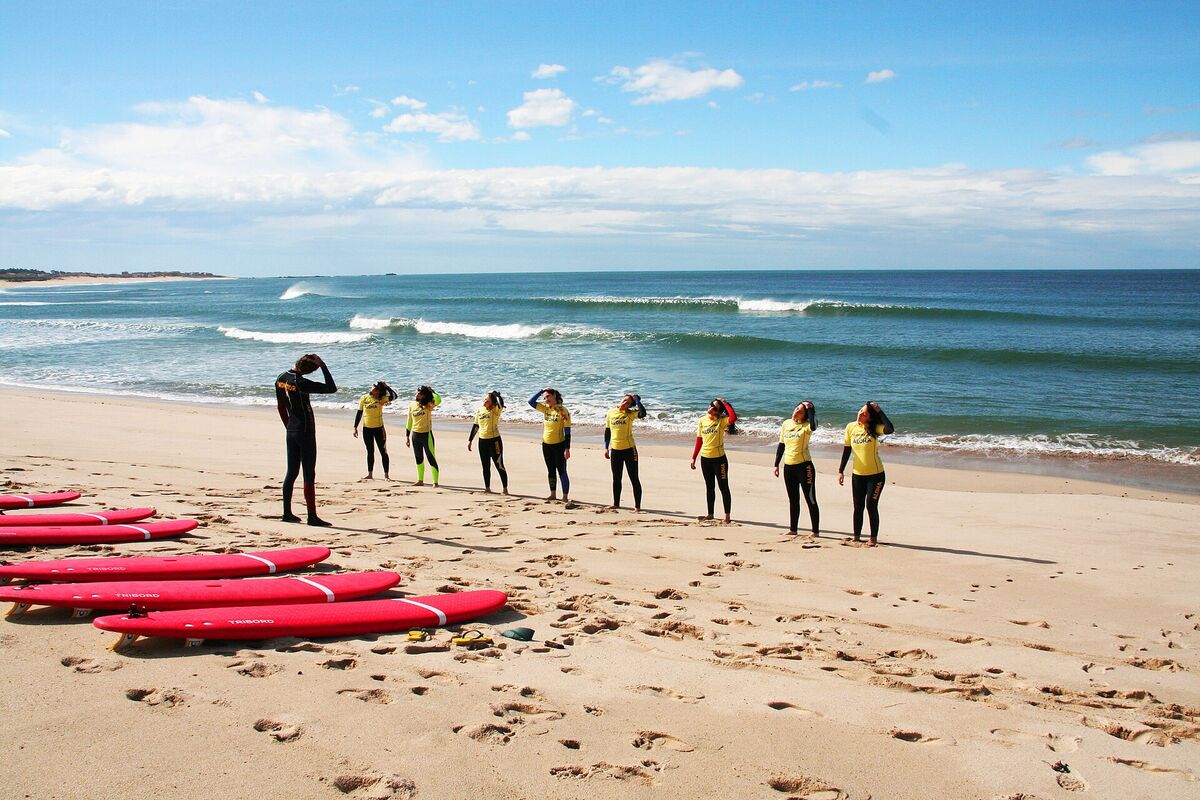
- Soft-top: the soft "foamie" type. Perfect for the first few months if you're surfing with a school or don't want to hurt other people in the water. It won't last long as a serious board.
- Wood (hollow wood, paulownia, balsa): beautiful, durable and sustainable. More expensive and heavier, but they're objects for life. There are European shapers who specialise in them (Kun Tiqi, Truwood, Jabali, UhainaPo, Linfa, No-Made, Wau, Koad…).
Where to buy: local shaper vs brand
If you buy from an industrial brand (JS, DHD, Lost…) you'll get a very good board with a flawless finish, but you'll be riding exactly the same thing as thousands of people elsewhere. A local shaper, on the other hand, will make you a board designed for your waves, through a process they can show you, and you can drop by to see it while it's being built.
The price is usually similar or even lower. The difference is the wait: the brand board is in the shop tomorrow; a shaper takes between 4 and 12 weeks depending on their order book.
The directory lists more than 200 shapers in 12 European countries. Filter by your country, look at the ones closest to you and drop by their workshop on a Saturday morning. A first conversation with a shaper is always worth it.
Budget and waiting times
As a guide (2026 prices):
- New industrial board from a shop: €450–700.
- Custom board from a local shaper (PU/EPS): €500–800.
- Handcrafted wooden board: €900–2,500.
- Second-hand board in good condition: €150–350 (a great way to start).
If it's your first board and your budget is tight, buying second-hand and saving the money for a good custom board from a local shaper once you know what you want is probably the smartest move.
Found this guide useful? Share it with someone who's just starting out, and if you know a shaper who isn't in the directory, let us know.