Some links in this guide are Amazon affiliate links: if you buy through them, Shapers Europe earns a small commission at no extra cost to you. As an Amazon Associate we earn from qualifying purchases. Nobody pays to be included in this list.
Walk into any shaper's workshop in Europe and you'll see the same thing: nine-and-a-half-foot logs leaning next to little swallow-tail fishes, sharp guns hanging from the ceiling and a foam blank waiting to become something. Each of those forms, or shapes, exists for a reason: a type of wave, a level, a style of surfing or simply a particular body.
This guide is long on purpose. We look at where each shape comes from, how to recognise it, which waves it works in, who it's designed for and which sizes and volumes make sense for your weight and level. If you want something quicker, have a look at our tool to calculate your board volume.
A short history: from wooden planks to the modern quiver
Hawaii: alaia and olo
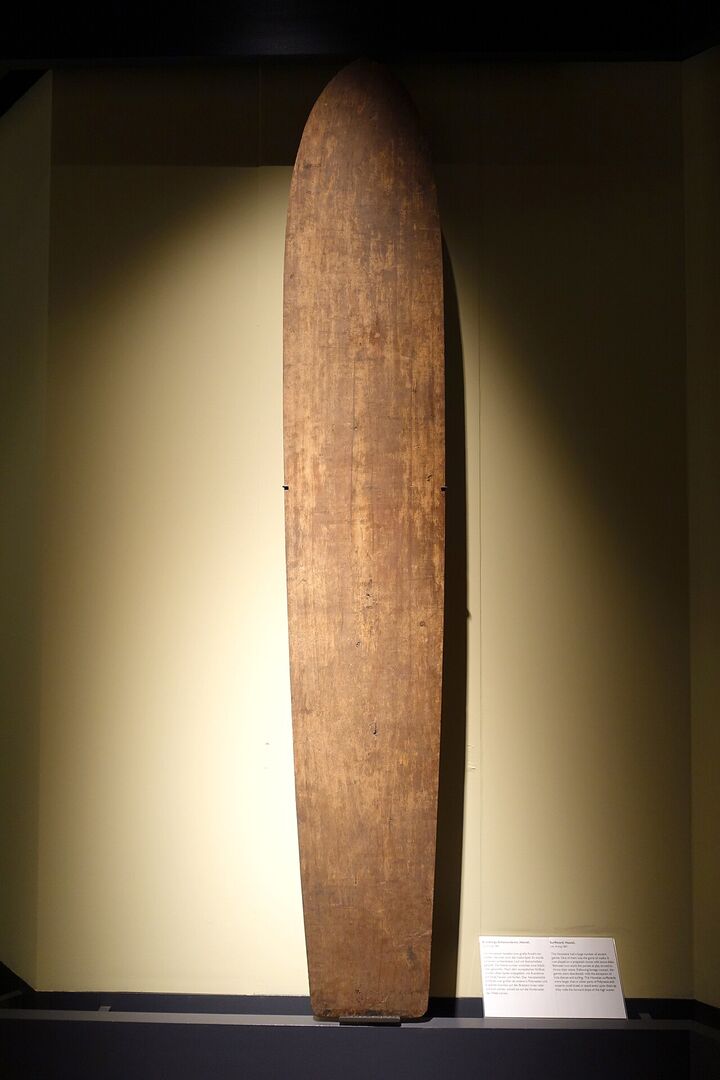
Surfing was born in Polynesia and reached its most refined form in Hawaii, where it was practised for centuries before Europeans arrived. Boards were made of solid wood (koa, wiliwili, breadfruit) and came in two main families: the alaia, thin, flat and finless, two to three metres long, ridden by ordinary people; and the olo, huge (up to five metres and more than 50 kilos), reserved for royalty. No fins, no rocker, no foam: all the control came from the surfer.
1900–1950: Duke, Tom Blake and the first fin
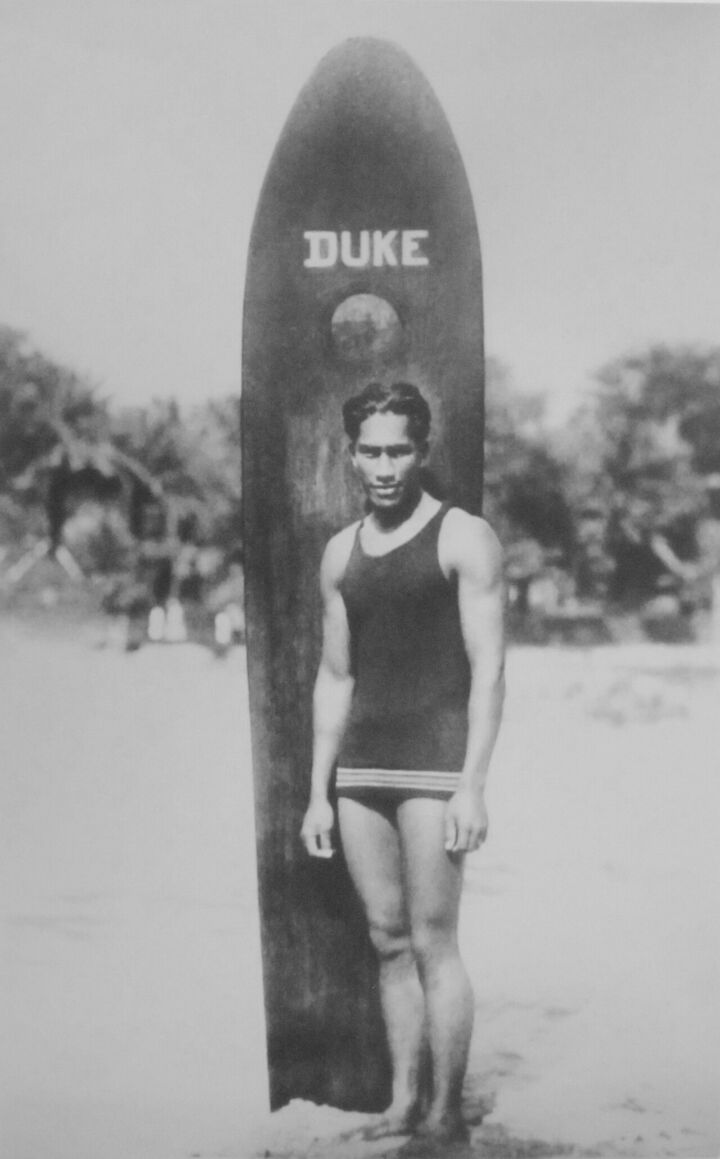
In the early 20th century surfing was revived at Waikiki, and Duke Kahanamoku took it to California and Australia with his demonstrations. Boards were still solid wood, long and extremely heavy. In the 1920s and 30s Tom Blake changed two fundamental things: he built hollow boards that were much lighter and, in 1935, he added a fixed fin for the first time. For the first time the tail stopped sliding out and a surfer could hold a line on the wave face.
1940s and 50s: balsa, fibreglass and the "Malibu chip"
After the Second World War came fibreglass and resins. Bob Simmons, Joe Quigg and Matt Kivlin experimented with glassed balsa cores in California and created shorter, lighter boards of about nine or ten feet that became known as Malibu chips. They are the direct ancestor of the modern longboard.
Late 1950s: polyurethane foam arrives
Hobie Alter and Gordon "Grubby" Clark began producing polyurethane (PU) foam blanks at the end of the 1950s. Foam was lighter, cheaper and easier to work than balsa, and surfing went mainstream. The 1960s belonged to the single-fin longboard, to walking the board and hanging your toes off the nose (hang ten).
1967–1970: the shortboard revolution
In just two or three years boards went from 9'6" to under 7'. In Australia, Bob McTavish, Nat Young and George Greenough experimented with shorter boards, V-bottoms and flexible fins inspired by fish fins. This was the shortboard revolution: surfing stopped being about gliding in a straight line and became about turning in the critical part of the wave. At the same time, in San Diego, Steve Lis designed the first fish, wide with a swallow tail, originally for kneeboarding.
1970s and 80s: twin fin and thruster
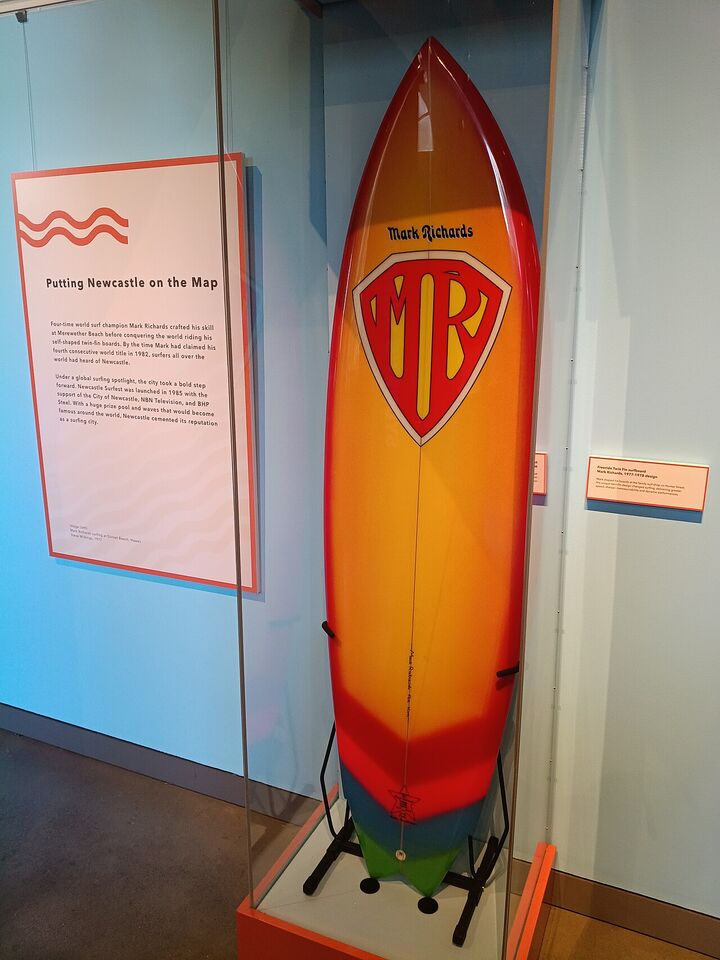
Through the 70s short single fins, pintails and the first twin fins lived side by side. In 1978 Mark Richards started winning on fast, loose twin fins, and in 1980–1981 Australian Simon Anderson introduced the thruster, with three fins of the same size. It gave more hold and control than the twin and, more than forty years later, is still the standard shortboard set-up.
Europe catches the wave
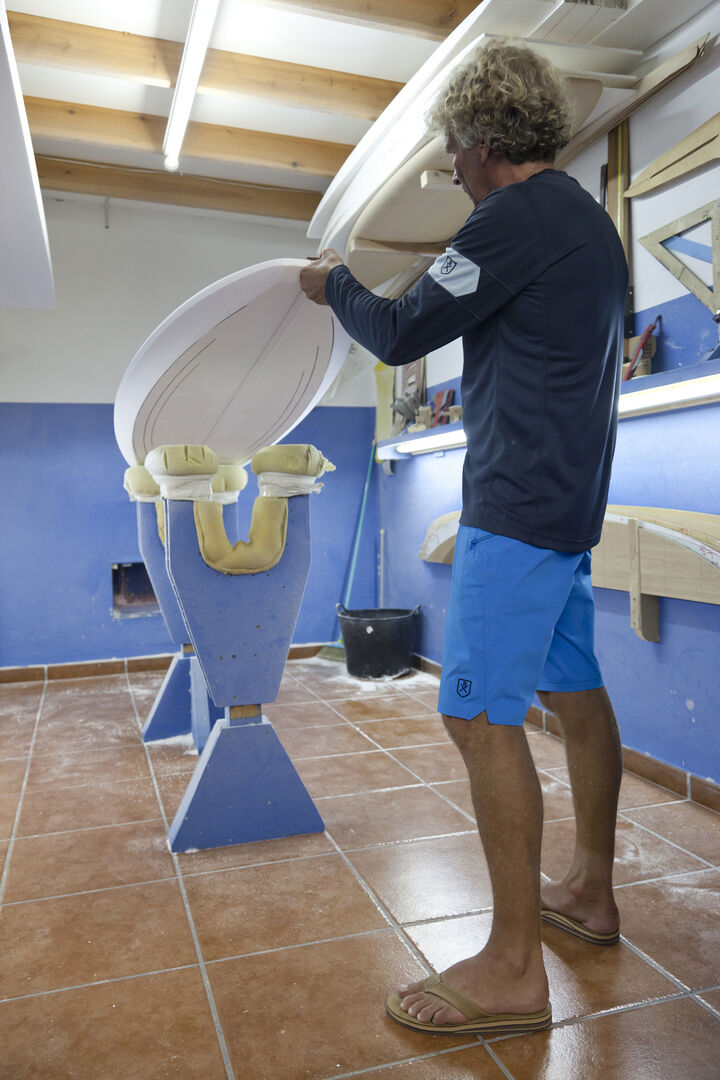
Modern surfing arrived in Europe through Biarritz in 1956–1957, when screenwriter Peter Viertel brought a board from California during a film shoot. Soon the first local shapers appeared on the French Basque coast, and in the 1960s surfing spread to Cantabria, the Basque Country, Galicia and Portugal, with pioneers who built their own boards by copying magazine photos. That is the root of the network of workshops listed in our shaper directory.
From 2005 to today: EPS, retro and mid-lengths
In December 2005 Clark Foam, which supplied most of the world's PU blanks, closed down. The industry was forced to diversify: EPS with epoxy, soft boards for surf schools and, later, recycled and plant-based materials all took off. At the same time many surfers rediscovered older shapes: fishes, single fins, eggs and mid-lengths. Today it's normal to own a varied quiver and pick the board according to the day.
Anatomy of a board: what defines a shape
Two boards of the same length can behave completely differently. What sets them apart is a handful of variables worth knowing before you talk to a shaper.
- Outline: the silhouette seen from above. A round nose and a parallel outline give stability and easy paddling; a pointed nose and a curvier outline allow tighter turns.
- Length, width and thickness: given in feet and inches (for example 6'0" × 19 1/4" × 2 7/16"). Width is measured at the wide point.
- Volume: in litres. It is the best predictor of how much a board floats and how easy it will be to paddle and catch waves.
- Wide point: further forward, the board paddles better and is more stable; further back, it turns better off the tail.
- Rocker: the curve of the board seen from the side. Little rocker = more speed and better paddling in weak waves. Lots of rocker = fits into hollow waves and turns in tight spaces, but is slower.
- Rails: thick, rounded rails are forgiving and float; thin rails with a hard edge in the tail bite into the face and give response.
- Bottom: flat, concave (single, double) or V. Concaves channel water and give lift and speed; V helps the board go rail to rail.
- Tail and fins: covered in detail further down.
Longboard
Typical size: 8'6"–10'0" long, 22"–23 1/2" wide, 2 3/4"–3 1/4" thick. Volume from 60 to more than 90 litres.
The longboard is the classic board: long, wide, round-nosed and full of volume. There are two main families:
- Noserider or log: heavy, with gentle rocker, rounded 50/50 rails, a nose concave for hanging off the front and one big single fin. The board for traditional style: walking, cross-stepping, hang five and hang ten.
- Performance longboard: lighter, with a little more rocker, thinner rails and often a 2+1 set-up. Allows more radical turns.
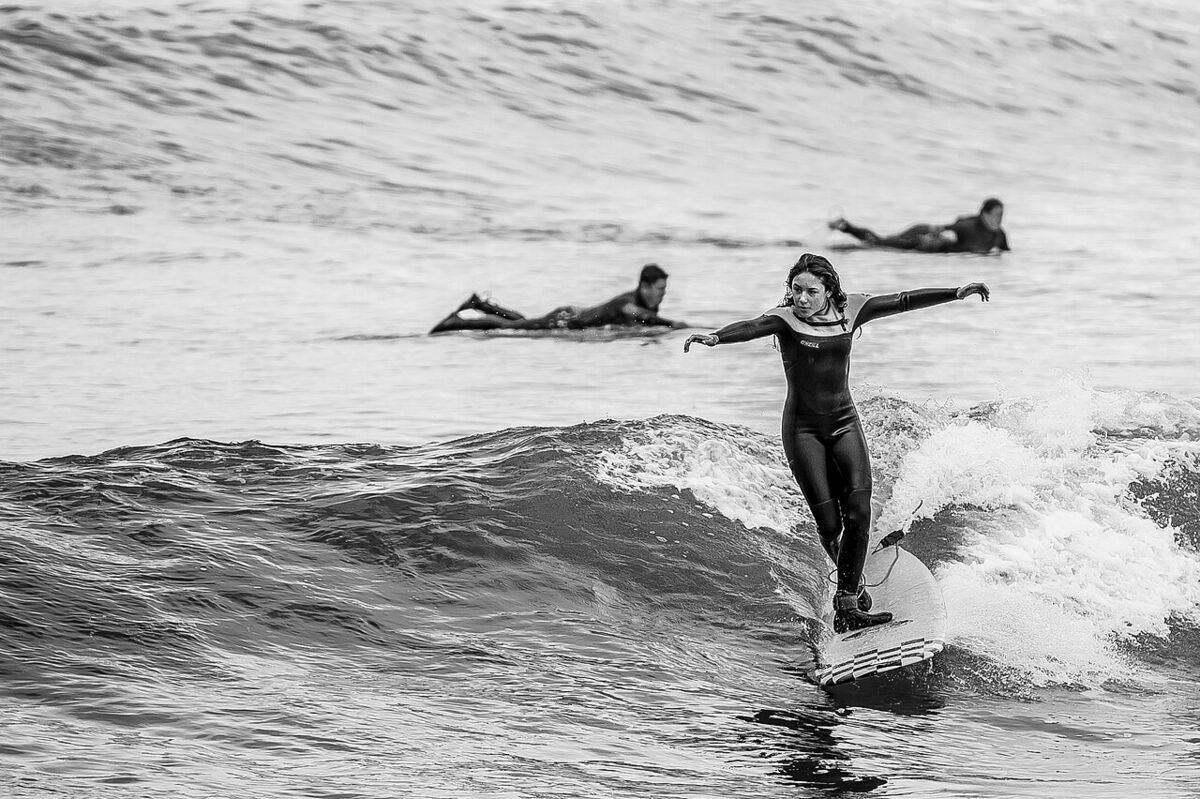
Waves: 0.5 to 1.5 m, slow, long and clean. Right or left points and beach breaks around mid tide. Hard to handle in big, hollow waves.
Level: everyone. It's probably the board on which you'll catch the most waves of your life, and at the same time the hardest to master in its classic form.
Who for: any weight. Lighter surfers (under 60 kg) usually do better on 8'6"–9'0"; from 85 kg upwards a 9'4"–9'8" with good thickness helps. You'll find European shapers specialising in longboards in the directory.
Pros: paddles like nothing else, catches waves early, great fun on small days. Cons: heavy, awkward to carry, hard to get through the impact zone on powerful days and dangerous in crowded line-ups if you can't control it.
Softboard (foam board)
Typical size: 7'0"–9'0", very wide (22"–24") and thick (3"–3 1/2"). Volume from 55 to 90 litres.
They have an EPS core, a soft foam deck and a slick plastic (HDPE) bottom. They're the boards surf schools use, and for good reason: they're safe, take knocks and float a lot.
Waves: whitewater and small waves up to 1 m. They're also a fun toy for experienced surfers on bad days.
Level: complete beginners and the first months of surfing.
Who for: anyone starting out, and especially children. Pick the length by weight: 7'0" up to 50 kg, 8'0" between 50 and 80 kg, 9'0" above 80 kg.
Pros: cheap, safe, ideal for learning. Cons: they feel slow and imprecise as soon as you have some level, and budget ones warp with sun and use.
Mini-mal and funboard
Typical size: 7'0"–8'2", 21 1/2"–23" wide, 2 3/4"–3" thick. Volume from 50 to 70 litres.
They're miniature longboards: round nose, lots of volume and a fairly parallel outline. The difference between a "mini-mal" and a "funboard" is mostly the name; a funboard usually has a slightly narrower nose and almost always three fins.
Waves: small to medium waves up to 1.5 m, especially weak ones.
Level: beginners after the first few weeks and lower intermediates. It's the most common step between a softboard and a shorter board.
Who for: people starting to ride the green face and make their first turns, or people who don't surf often and want to catch plenty of waves. 7'0"–7'4" under 65 kg, 7'6"–7'10" between 65 and 85 kg, 8'0" or more above that.
Pros: very easy, versatile in small waves, more manageable than a longboard. Cons: it doesn't excel at anything in particular; as you progress you'll want more manoeuvrability.
Mid-length and egg
Typical size: 6'10"–8'0", 20 1/2"–22" wide, 2 5/8"–3" thick. Volume from 40 to 60 litres.
The big phenomenon of recent years. They take the easy paddling of a longboard and add flowing turns. There are many variants within the family:
- Egg: outline rounded at the nose and tail, like an egg. Very smooth, perfect for long drawn-out lines.
- Classic single fin / pintail: inspired by 70s boards, with a narrow tail for waves with more power.
- Modern 2+1 or thruster mid-length: more rocker and thinner rails, handles waves up to two metres.
Waves: 0.8 to 2 m, with a medium face. They work very well in Atlantic beach breaks and on points.
Level: intermediate and advanced. Also for surfers coming back after years away, or who want smoother, less physically demanding surfing.
Who for: as a guide, a length between your height + 50 cm and your height + 70 cm. At 75 kg, a 7'2"–7'6" of about 45–50 litres is a very sensible starting point.
Pros: "one board for almost everything", paddles very well and is still fun. Cons: hard to fit into very hollow or very short waves; some people miss sharper turns.
Fish
Typical size: 5'2"–6'4", 20 1/2"–22" wide, 2 3/8"–2 3/4" thick. Volume from 28 to 42 litres.
The classic fish is short, wide and flat, with the wide point slightly forward and an open swallow tail, almost always with two big fins (twin keel) or four (quad). It's ridden 4 to 8 inches shorter than a shortboard.
Waves: 0.5 to 1.5 m, soft and gutless. The perfect summer board and great for wind swell. In big, hollow waves the wide tail gets loose and hard to control.
Level: intermediate upwards. For many surfers it's the first "short" board after the mini-mal.
Who for: as a rule, 10 to 20 cm shorter than your height, with a bit more volume than your shortboard. At 75 kg and intermediate level, a 5'8"–5'10" of about 34–38 litres.
Pros: super fast in small waves, fun, forgiving. Cons: slides more in tight turns and has a clear ceiling on bigger days.
Many European workshops, such as the fish makers in our directory, have their own take, often designed for the waves in their area.
Hybrid and groveler
Typical size: 5'4"–6'2", 19 3/4"–21 1/2" wide, 2 3/8"–2 3/4". Volume from 28 to 40 litres.
Hybrids mix the width and volume of a fish with the sharper nose and rocker of a shortboard. Grovelers are the version built for poor waves: very little rocker, lots of volume under the chest, a wide tail (squash or swallow) and usually thruster or quad fins.
Waves: 0.5 to 1.5 m, from very weak to slightly punchy. The typical summer day on the Bay of Biscay or the Mediterranean.
Level: intermediate and advanced. It's the everyday board for a huge number of surfers.
Who for: ridden 2 to 6 inches shorter than your shortboard and with 2–4 litres more. At 75 kg and a good level, a 5'8" of 31–33 litres.
Pros: lets you surf like on a shortboard in waves that wouldn't work for one. Cons: lacks control on good, powerful days.
Shortboard
Typical size: 5'8"–6'4", 18 1/4"–19 3/4" wide, 2 1/4"–2 1/2" thick. Volume from 23 to 33 litres.
The modern competition board: narrow, thin, pointed nose, plenty of rocker, concaves and three fins. It responds instantly to every movement and lets you surf the most critical part of the wave, but it demands technique, fitness and good waves.
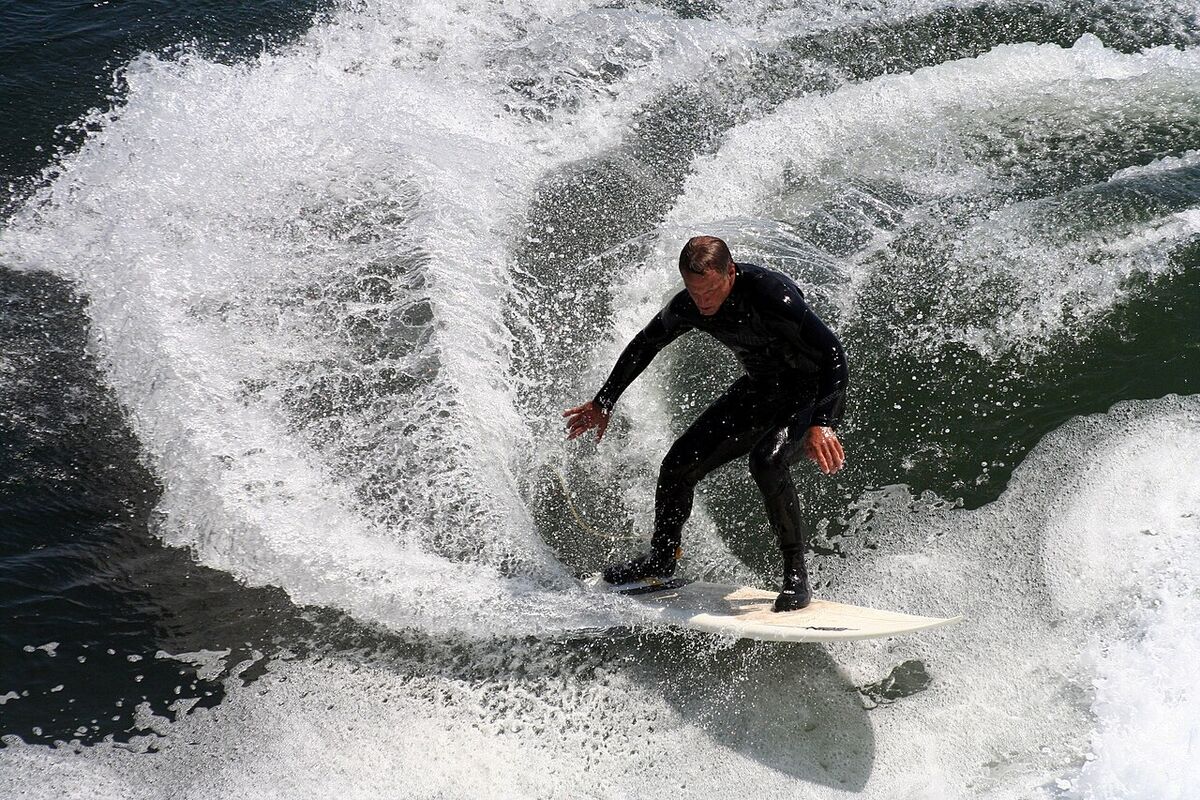
Waves: 1 to 2.5 m, with a face and power. Beach breaks with good sandbanks and reefs. In weak waves it sinks and goes nowhere.
Level: upper intermediate and advanced. It's not a good board to learn on: most people who move to one too early stop progressing.
Who for: as a guide, from your height to your height + 15 cm, with 0.36 to 0.42 litres per kilo if you have a good level. At 75 kg, a 6'0" of 28–30 litres.
Pros: maximum performance and control. Cons: harder to paddle, you catch fewer waves and it's very unforgiving of mistakes.
Step-up and gun
Step-up: a slightly longer shortboard (3–6 inches), narrower and with a finer tail (round pin or narrow squash). It's the board for when the sea rises to 2–3 m and your usual board no longer lets you paddle in safely or hold the speed.
Gun: from 6'10" to more than 10'. Narrow and long, with a pointed nose and tail (pintail) and lots of nose rocker. It's designed to paddle fast into big waves and keep control at high speed. Semi-guns (6'10"–7'6") are used in waves of 2.5 to 4 m; big-wave guns (9'+) for much bigger surf.
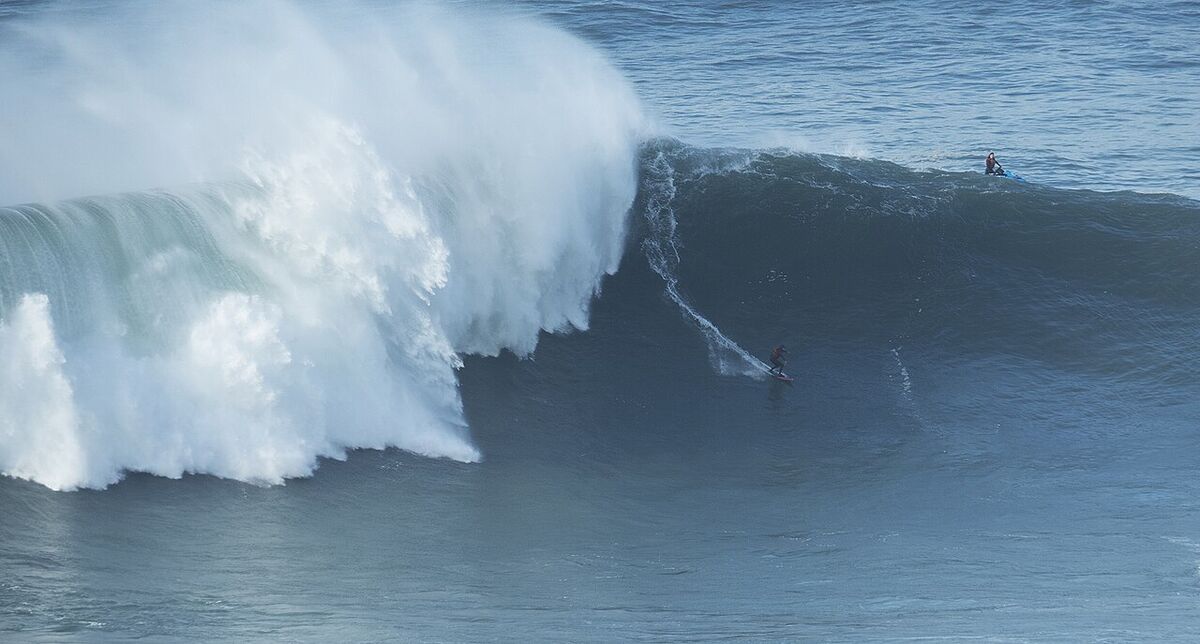
Waves: big and powerful: Mundaka or Rodiles on big days, Belharra, Nazaré, Mullaghmore, the Canary Island reefs in winter.
Level: advanced and expert, with real big-wave experience.
Who for: almost always custom made. In Spain there are workshops such as Special Royd in Tenerife, focused on guns, and many other shapers who make them to order; search for "gun" in the directory.
Other boards: alaia, foil and tow-in
- Alaia: the modern revival of the Hawaiian board. A thin wooden plank (paulownia, for example), finless, 5 to 8 feet long. Very fast and very difficult; for experienced surfers looking for a different feeling.
- Foil: a short, voluminous board with a hydrofoil under the bottom that makes it "fly" above the water. It lets you ride tiny waves or waves far from shore. It needs its own learning curve and a lot of care around other people in the water.
- Tow-in: short, heavy, narrow boards with footstraps, for giant waves you're towed into by a jet ski.
Shape summary table
| Shape | Length | Volume* | Waves | Level |
|---|---|---|---|---|
| Softboard | 7'0"–9'0" | 55–90 L | Whitewater – 1 m | Beginner |
| Longboard | 8'6"–10'0" | 60–90 L | 0.5–1.5 m, slow | All |
| Mini-mal / funboard | 7'0"–8'2" | 50–70 L | 0.5–1.5 m | Beginner – intermediate |
| Mid-length / egg | 6'10"–8'0" | 40–60 L | 0.8–2 m | Intermediate – advanced |
| Fish | 5'2"–6'4" | 28–42 L | 0.5–1.5 m, soft | Intermediate – advanced |
| Hybrid / groveler | 5'4"–6'2" | 28–40 L | 0.5–1.5 m | Intermediate – advanced |
| Shortboard | 5'8"–6'4" | 23–33 L | 1–2.5 m, powerful | Upper intermediate – advanced |
| Step-up | 6'4"–7'0" | 28–38 L | 2–3 m | Advanced |
| Gun | 6'10"–10'+ | 35–80 L | 3 m and up | Expert |
* Approximate volumes for an adult of 60–90 kg.
Size and volume by weight and level
Length is only part of the story. The figure that helps most is volume relative to your weight (with your wetsuit on, which adds 2–3 kg in winter). This table uses factors widely used by shapers and surf schools:
| Your weight | Beginner × 0.9–1.0 | Lower intermediate × 0.65–0.75 | Intermediate × 0.5–0.6 | Advanced × 0.36–0.42 |
|---|---|---|---|---|
| 50 kg | 45–50 L | 33–38 L | 25–30 L | 18–21 L |
| 60 kg | 54–60 L | 39–45 L | 30–36 L | 22–25 L |
| 70 kg | 63–70 L | 46–53 L | 35–42 L | 25–29 L |
| 80 kg | 72–80 L | 52–60 L | 40–48 L | 29–34 L |
| 90 kg | 81–90 L | 59–68 L | 45–54 L | 32–38 L |
| 100 kg | 90–100 L | 65–75 L | 50–60 L | 36–42 L |
To fine-tune it, use our volume calculator. And adjust with common sense:
- You surf rarely (less than once a week) or you're over 45–50: add 10–15%.
- Weak waves most of the year: more volume and wider boards. Powerful waves: less volume, more rocker, thinner rails.
- Cold water: in a 5/4 with boots you paddle worse; a couple of extra litres make a difference in winter.
- Height: tall surfers are usually more comfortable with a bit more length (more paddling area) even at the same volume; shorter surfers prefer shorter, wider boards.
A good shaper will ask your weight, height, how often you surf, in which waves and what board you ride now. With that information, volume can be dialled in far better than with any generic table.
Tails and fins
The tail decides how the board releases water and therefore how it turns. Some common shapes:
- Squash: the most versatile. Lots of surface area and quick turns. Standard on shortboards and hybrids.
- Round: smoother turns and more hold in powerful waves. Very common on eggs, mid-lengths and step-ups.
- Pin: minimum surface and maximum hold. For big, hollow waves: guns and barrel boards.
- Swallow: combines the area of a wide tail with two pivot points. The signature of the fish.
- Square: straight and wide, very stable. On classic longboards and some grovelers.
- Diamond: halfway between squash and pin, common on small-wave boards.
And fins, which nowadays are almost always removable (FCS II or Futures systems):
- Single fin: one big centre fin. Wide, drawn-out turns and classic style. Longboards, eggs and retro mid-lengths.
- Twin: two side fins. Lots of speed and loose turns, with some slide. Fishes and retro twin fins.
- Thruster: three fins. Control and hold in any wave: the standard on shortboards and hybrids.
- Quad: four fins. Twin-fin speed with more hold; very good in hollow waves and on modern fishes.
- 2+1: one big centre fin and two small side bites. On performance longboards and mid-lengths.
Many modern boards come with five fin boxes so you can try thruster and quad on the same board. Changing fins is the cheapest way to change how a board behaves.
Which shape for Europe's waves
Europe has very different coastlines, and that shows in each region's workshops:
- Northern Spain (Galicia, Asturias, Cantabria, Basque Country) in summer: small, soft waves almost every day. Longboard, mid-length, fish or groveler. Shapers such as CeCe Longboards or Full&Cas know these conditions well.
- Northern Spain and south-west France in autumn and winter: powerful groundswell and punchy beach breaks (Hossegor, Zarautz, Razo, Rodiles). Shortboard and step-up; a gun for big days at Mundaka or Belharra.
- Portugal: a bit of everything: long points at Ericeira, beach breaks at Peniche and Costa da Caparica, big waves at Nazaré. A quiver of two or three boards makes a lot of sense. Polen and other Portuguese workshops make finely tuned fishes and grovelers.
- Mediterranean: short-period wind swell. Generous volume: longboards, mini-mals, fishes and grovelers.
- Canary Islands: lava reefs with hollow, powerful waves in winter. Shortboards with rocker, step-ups and guns.
- Ireland, the UK and the North Sea: cold water (add volume for the wetsuit), varied waves and lots of wind: mid-lengths and grovelers are very popular.
To see what each area's conditions are like, have a look at our European surf spots and the surf forecast.
Building your quiver step by step
- First year: a softboard or a high-volume mini-mal. If your spot has small, long waves, a longboard is also a great choice.
- Second year: a mini-mal or a slightly slimmer mid-length. You start doing bottom turns and riding along the wave.
- Intermediate: a mid-length or fish for small days and a hybrid for days with some power.
- Advanced: the classic three-board quiver: groveler or fish (small days), shortboard (good days) and step-up (big days). Many surfers add a longboard for the summer.
You don't need to buy everything new: a local shaper can repair, check or recommend second-hand boards, and often has demo boards.
Recommended gear
A good board from a local shaper is the best investment you can make in your surfing. For everything else, these are the basics worth having from day one:
A softboard to start with
A 7'0" to 8'0" foam board is the safest and cheapest way for you, or your kids, to start. Look for one with internal stringers and an HDPE bottom.
View on AmazonA leash that matches your board
Your leash should be roughly as long as your board: 6' for shortboards, 7'–8' for mid-lengths and 9' (ankle or knee) for longboards.
View on AmazonFCS II or Futures fins
A spare set of fins, or a different template from the one your board came with, completely changes how it rides. Check which fin system your board has before you buy.
View on AmazonA board bag
Protects your board from the sun and from knocks in the car. For flying, go for a padded bag of 10 mm or more.
View on AmazonWax and traction pad
Wax for your water temperature (cold or cool for the European Atlantic most of the year) and, on shortboards, a traction pad on the tail.
View on AmazonFAQ
What's the best shape to start with?
A softboard or a mini-mal with a volume close to your weight in kilos. A longboard also works if your spot has small, slow waves.
When should I move to a shorter board?
When you catch unbroken waves on your own, drop in at an angle and ride along the wave comfortably in most sessions. Reduce volume gradually: jumping from 70 to 30 litres is the fastest way to stop progressing.
Fish or hybrid?
A fish is faster and flows better in soft waves; a hybrid turns tighter and copes better when the wave has some power. If you like loose, stylish surfing, go fish; if you're coming from a shortboard, go hybrid.
One board for everything?
For most intermediate surfers in Europe, a 7'0"–7'6" mid-length or a fish/hybrid with a little extra volume covers most days of the year.
Why buy from a local shaper?
Because they can tune volume, rocker and fins to your body and your waves, and explain it all to you in person. With more than 200 workshops across Europe, there's almost certainly one near you.
Know which shape you want? Find a workshop near you in the European shaper directory and filter by board type: longboard, mini-mal, fish, shortboard or gun.