Buying an industrial board is incredibly convenient: you walk into a shop, try a model and take it home. But if you honestly compare the two options (industrial board vs custom board from a local shaper), the scales tip much further towards the craft side than you might think. These are the five reasons we believe it's worth it.
1. A board made for you and your spot
An industrial brand designs its range for "the 75 kg surfer who rides medium to good waves". That average person almost never exists. A local shaper will make a board for your weight, your level and your usual waves. If you mostly surf small, weak waves at a beach break with no face, you don't need the same rocker as a hot surfer in Hossegor on an October swell.
2. Better value for money
A handcrafted custom board costs around €500–800. A new industrial board, between €500 and €750. The price difference is small or zero. The difference in what you get is huge: the industrial board carries a shop margin, a distribution margin and a brand margin; the custom one goes straight from the shaper's hands to yours.
3. A smaller carbon footprint
An industrial board is typically designed in California, made in China or Thailand, stored at a European port and trucked to your shop. Your local shaper works 30 minutes' drive from your home. The transport maths simply doesn't compare.
If you also go for eco resins or wood, the impact drops even further. Shapers such as Kun Tiqi, Notox, Linfa or Wau have processes designed specifically to reduce environmental impact.
4. Keeping the craft alive for the next generations
The shaper's craft is disappearing in Europe. There are fewer and fewer small workshops, and when a shaper retires without an apprentice, that knowledge is lost. If surfers stop buying handmade, in 20 years only the industrial brands will be left. Every custom board you buy is a vote for a future in which the craft lives on.
5. You learn something every time you visit the workshop
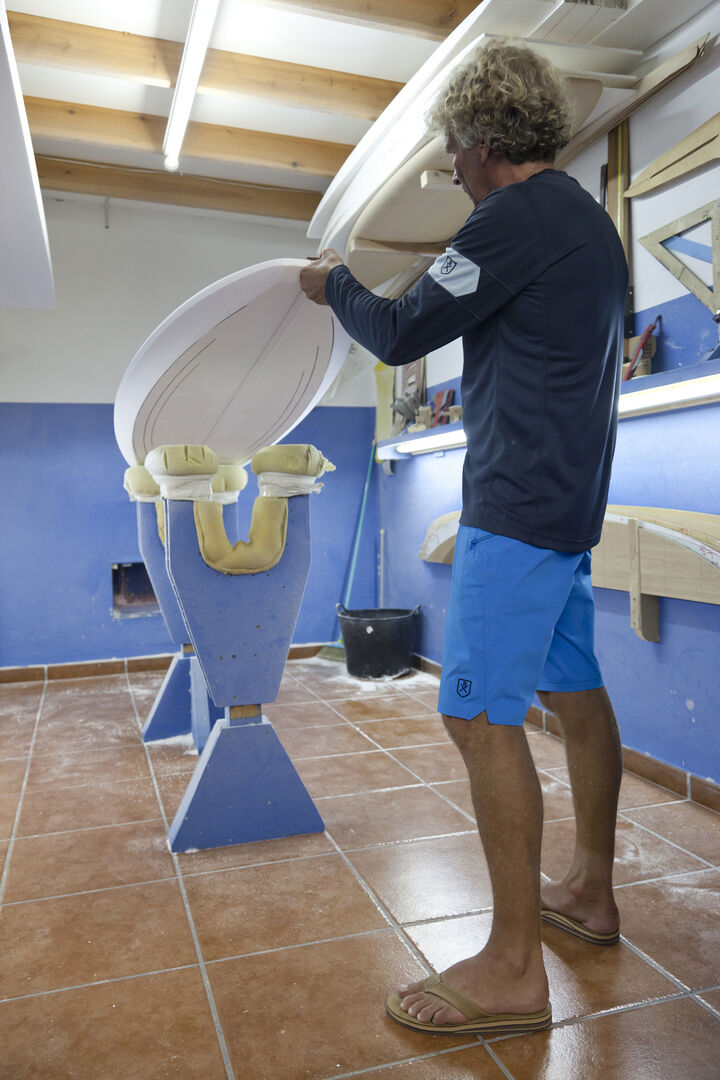
Visiting a workshop is part of the experience. Watching them paint your board, understanding why they recommend that rail, that tail, those fins… makes you a better surfer. You start reading waves better because you understand your tool better. It's hard to quantify, but everyone who has made the switch agrees.
"The first time I walked into a workshop and saw Toño painting a board made just for me, I understood what it means to surf something made for you. I'm not going back." — An anonymous surfer from Cantabria.
Ready to take the step? Start by filtering the directory by your country, contact two or three shapers nearby and visit their workshop on a Saturday. That first conversation is free and it will change the way you buy boards for good.