Some links in this guide are Amazon affiliate links: if you buy through them, Shapers Europe earns a small commission at no extra cost to you. As an Amazon Associate we earn from qualifying purchases. Nobody pays to be included in this list. Links to other shops (Blue Tomato) may also be affiliate links: we earn a small commission if you buy, at no extra cost to you.
You need far less gear to start surfing than you might think. A soft board, a wetsuit that suits the water, a leash and a bar of wax will get you through your whole first year. This guide covers what to buy, where you can save without cutting corners, and when to move on to a handmade board.
Before you buy anything
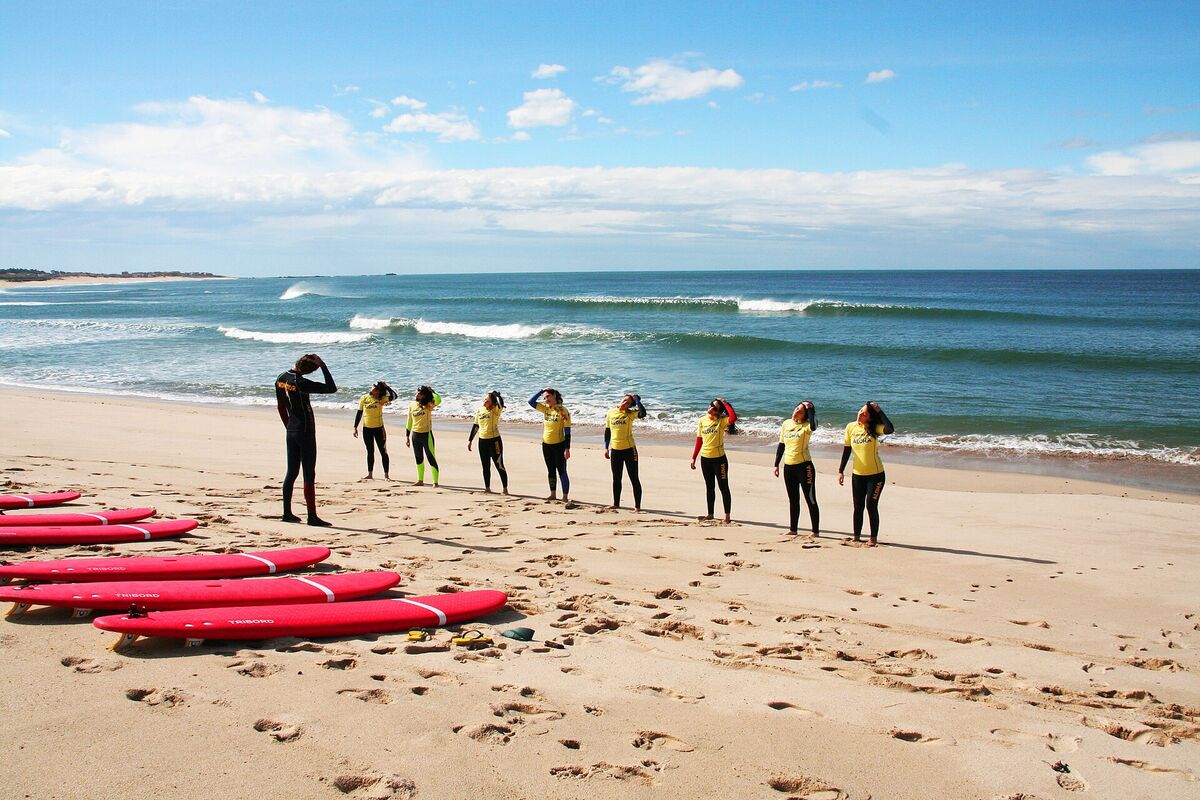
If you've never surfed, take a few lessons at a surf school first: they'll lend you a board and wetsuit, you'll learn to read currents, and you'll find out whether you're hooked before spending money. Once you're standing up in the whitewater and want to paddle out on your own, that's when your own gear is worth it.
The board: start on a soft-top
A soft-top (foam board) is the best first board: it floats a lot, it's stable, it forgives mistakes and, if it hits you, it hurts a lot less than a hard board. For an adult, the rule of thumb is a board between 7'0" and 8'0" with 60 to 90 litres of volume, depending on your weight. To fine-tune it, use our volume calculator.
You don't need the most expensive board, but do pick a surf brand. We recommend Torq, a European brand with great value that you'll see at lots of surf schools; Softech, a bit pricier but among the best finished; and Quiksilver's Break, a classic first board. All three handle beach life well.
Beginner soft-top (7'–8')
The board for your first months: stable, buoyant and safe for you and the people surfing next to you.
Torq on Amazon Softech on Amazon Quiksilver Break on AmazonWhat about the mass-produced hard boards sold in big stores? For learning they add nothing over a soft-top, and when you really need a hard board you're better off with one made to measure (more on that at the end).
The wetsuit
In Europe it matters as much as the board: if you're cold, you don't learn. For most of the Atlantic coast a 4/3 covers you from autumn to spring, and a 3/2 works for summer and the Mediterranean. For a first suit, Amazon has entry-level wetsuits that are great value; if you're after surf brands (O'Neill, Rip Curl, Xcel…) or less common sizes, Blue Tomato has a much wider range.
4/3 wetsuit to get started
A back-zip suit is easier to get into; a chest-zip is warmer.
View on Amazon View at Blue TomatoTo find the right thickness for each region and season, read our guide on which wetsuit you need.
Leash, wax and board bag
- Leash: keeps you attached to your board so it doesn't fly into other surfers. For a 7'–8' soft-top, go for a 7 or 8 ft leash, 7 mm thick. Many soft-tops come with one.
- Wax: soft-tops grip well at first, but the deck gets slippery with use and a layer of wax fixes that. Pick the one for the water temperature where you surf (cold, cool or warm) and carry a wax comb.
- Board bag: protects the board from the sun and from knocks in the car. A thin day bag is enough for a soft-top; if you fly, you'll need a padded one (see our guide to travelling with your board).
Wax and comb
One bar of base coat and one for the water temperature will last you months.
View on AmazonA repair kit for the trip
On a surf trip, a ding on day one can ruin your week. Always carry a small kit: repair tape (ding tape), a putty or solar resin that hardens in the sun in a few minutes, a piece of sandpaper and a little alcohol for cleaning. It takes up less space than a water bottle.
The emergency trick: plumber's tape. If you've got nothing else, duct tape or the self-amalgamating tape plumbers use, sold in any hardware shop, will get you out of trouble: dry the area well, seal it with tape and finish your session. It's only a patch for that day. Take it off as soon as you're out of the water and repair the ding properly, because the foam keeps soaking up water underneath.
Self-amalgamating or duct tape
Cheap, fits in any backpack pocket and also fixes your board bag, leash or van.
View on AmazonHow to repair the ding afterwards, step by step and according to your board's material: how to repair your surfboard.
Your next board: from your local shaper
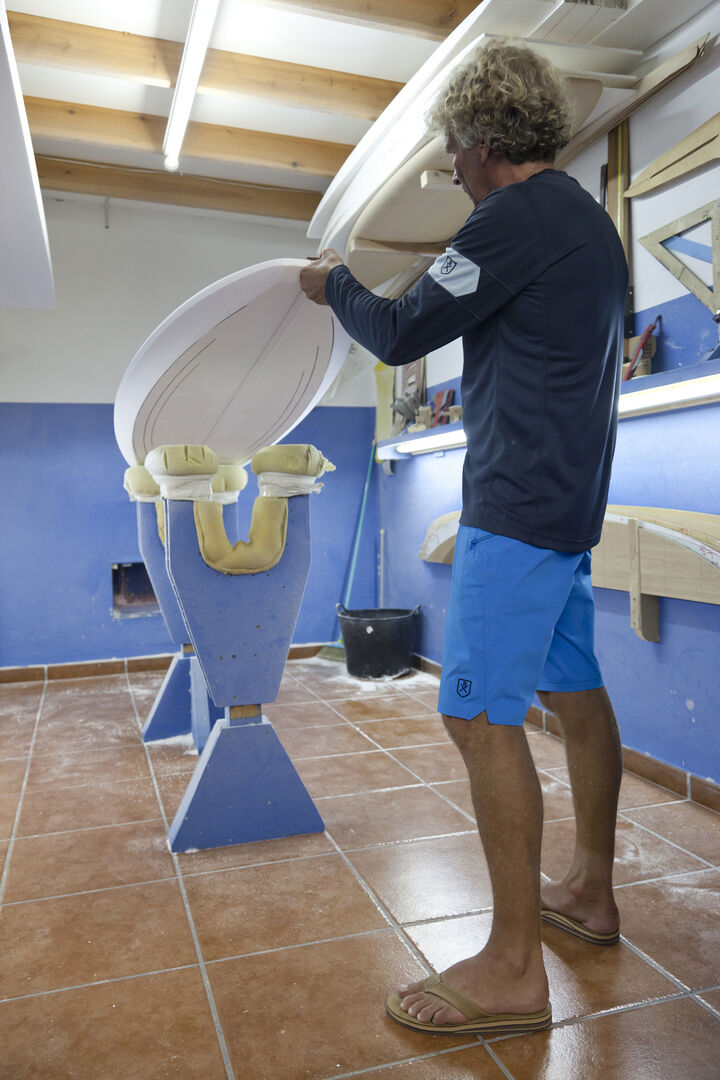
Once you're catching green waves, paddling comfortably and your soft-top starts holding you back, it's time for your first hard board. And our advice here is clear: for intermediate and advanced surfers, the best choice is a board from a local shaper.
- It's made for your weight, your level and the waves you actually surf, not for an average catalogue surfer.
- You can talk to the person who made it, tell them what you like and what you don't, and fine-tune the next one.
- They'll repair it properly when you ding it, often for less than you'd think.
- The money stays in your local surf scene, and the board usually outlasts a mass-produced one.
A custom board doesn't cost much more than a good brand-name board. The directory lists more than 200 shapers across Europe, and our guide on choosing your first board tells you what to ask for. To find out more, read why buy from a local shaper.